Posts

Showing posts with the label Lines and Angles

Lines and Angles - Bisecting
Image
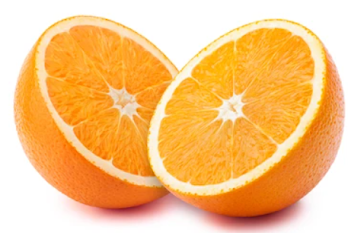
Now, we are going to look at another topic under lines and angles, bisecting. The meaning of this can be derived from the name itself. 'Bi' means 2 and bisecting means dividing something exactly in half, like this orange here, But In this lesson. we will only look at line and angle bisecting.  You might think that we could bisect a line just by marking the midpoint and drawing a line through it. But this is not quite so simple. If you draw a line like that, It might not be straight or exactly perpendicular to the original line. So it can't be taken as a bisector.  To correctly bisect a line, we need a compass. We open the compass wider than half of the given line and place it one one end of the line. Then we draw an arc on both sides of the line. We do the same thing after placing compass on the other end of the line. Now we have to arcs on either side of the line. It will appear like this, Then we just have to plot points at the intersecting points of the arcs and join the...

Lines and Angles - Constructing shapes

Image
lines and angles are heard of in almost every topic under mathematics. The relationship between these and the many different creations it can make are both complex and beautiful. From these, the first we'll be looking into is the construction of shapes using these lines and angles.  There are quite a lot we can do under this too but lets stick to your syllabus right? When we are constructing rectangles and triangles, one thing to always remember is that all the angles in both is 90 degrees. So the important thing to consider here is the length of the sides. To draw a square, knowing just one side length is enough. For example, we are asked to construct a square of with a side length of 5 cm. To do this we start by drawing one side of the square. Then we take 90 degrees from one end of that line with a protractor. Like so, Then mark the 90 degrees degrees point with a pencil.  Note: Remember to start count from the scale starting with 0 at the line. The protractor provides a sc...